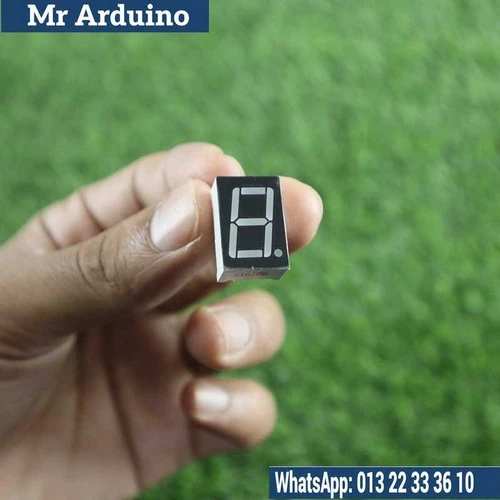
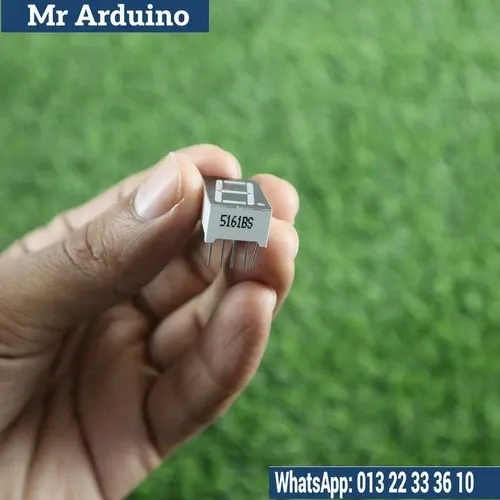
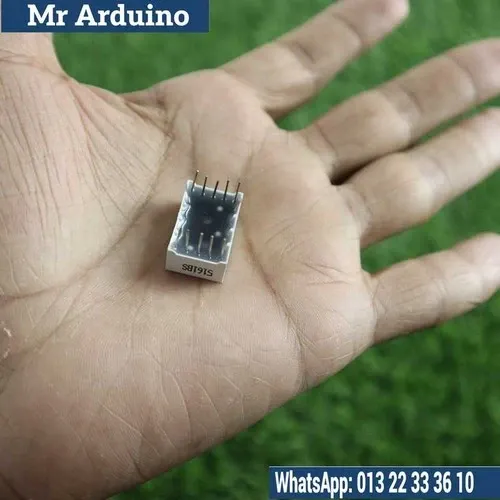
The 7 Segment 1 Digit 5161BS CA is a compact and efficient 7-segment display module designed to show a single digit (0-9) using 7 individual LEDs arranged in a figure-eight pattern. It is primarily used in electronic projects, displays, and devices where numeric output needs to be clearly visible. The display can be controlled using a suitable microcontroller or driver IC, and it can be used in a variety of DIY projects, calculators, clocks, thermometers, and many other applications that require digital number display.
The 5161BS CA model features common-cathode pins, meaning that all the cathodes of the LEDs are connected together, and you can control each segment individually by applying a voltage to the corresponding anode pin. This makes it easy to interface with digital systems, and it offers high visibility in low-light conditions.
How It Works:
The 7 Segment 1 Digit 5161BS CA display works by lighting up specific segments to form a desired number. Here's how it works:
- Control Pins: The 7-segment display has 7 individual control pins corresponding to each of the 7 segments (a, b, c, d, e, f, g) of the display. In addition, there is a common cathode pin (which is shared by all segments).
- Current Flow: To display a digit, you apply a voltage to the corresponding segments while grounding the common cathode pin. The segments are LED lights that will light up based on the input signal.
- Displaying Numbers: For example, to display the number “1”, you would turn on segments b and c, while keeping the other segments turned off. Similarly, different combinations of segments are turned on or off to form all the digits from 0 to 9.
- Microcontroller Interface: You can interface this display with a microcontroller (such as an Arduino or Raspberry Pi) by controlling the pins via digital outputs. The microcontroller sends a signal to each segment, allowing it to display the corresponding number.
Key Features:
- 1 Digit Display: The display is capable of showing one single digit (0-9) at a time, making it suitable for applications where only one value needs to be shown.
- 7 Segment Design: The display uses 7 LEDs arranged in a figure-eight pattern to form numeric digits. Each segment can be controlled independently to form numbers.
- Common Cathode Type: The common cathode configuration means all the segments share a common ground, and you need to apply positive voltage to the appropriate segment pins to turn them on.
- High Brightness: The LED segments offer high brightness and are easily visible, even in low-light environments.
- Compact Size: The module is small and compact, making it ideal for space-constrained applications and easy to integrate into DIY projects.
- Low Power Consumption: The module operates with low power consumption, making it suitable for battery-powered devices or energy-efficient designs.
- Durable and Reliable: Built with high-quality materials for long-lasting performance and durability.
Specifications:
- Digit Type: 1 Digit 7 Segment Display
- Display Type: Common Cathode (shared cathode for all segments)
- LED Color: Typically Red, though other colors may be available.
- Segment Count: 7 segments (labeled as a, b, c, d, e, f, g)
- Operating Voltage: Typically 5V (works well with Arduino and other 5V microcontrollers)
- Current Rating: Each segment typically draws 20mA of current when lit, and the total current draw will depend on how many segments are on.
- Viewing Angle: Approximately 45° to 60°, providing good visibility at common angles.
- Pin Configuration:
- 7 Segments: Pins for each of the segments (a, b, c, d, e, f, g)
- Common Cathode Pin for all segments.
- Size: Typically around 20mm x 20mm for a single-digit display.
Applications:
- Clocks & Timers: Can be used in digital clocks or timers to display the time or elapsed time.
- Counters: Suitable for counter applications where only one digit is required to count up or down.
- DIY Projects: A staple in DIY electronics projects, such as Arduino-based projects or Raspberry Pi applications where simple numeric output is needed.
- Display Systems: Used in simple calculators, temperature displays, humidity meters, or any device requiring numeric outputs.
- Metering: Ideal for voltage meters, current meters, frequency counters, and other measurement-based applications.
- Industrial Applications: Can be used in industrial devices to show numerical data, such as machine counters or readouts.
Limitations:
- Limited Display: Can only display one digit at a time, so if you need to show multiple digits (e.g., two-digit numbers), you would need to use multiple 7-segment displays.
- Limited by Segments: Although it can show all the digits from 0-9, it can't display letters or other symbols beyond these digits (except for a few specific alphanumeric characters that can be formed with the available segments).
- Requires Driver IC or Microcontroller: It typically needs a driver IC or a microcontroller (like an Arduino) to control the segments effectively, especially if multiple displays are used in a project.
Example of Displaying Digits:
- 0: All segments except for g are turned on.
- 1: Only segments b and c are turned on.
- 2: Segments a, b, d, e, and g are turned on.
- 3: Segments a, b, c, d, and g are turned on.
- Similarly, other digits from 4 to 9 have different segment combinations that allow the display of numbers.
Conclusion:
The 7 Segment 1 Digit 5161BS CA is an excellent choice for projects that require the display of single digits. Whether you're building a digital clock, counter, sensor readout, or any other device that needs a clear numeric display, this 7-segment display is compact, reliable, and easy to use. Its common cathode configuration and individual segment control make it simple to interface with microcontrollers for seamless integration into your project.