Your cart is empty, and it looks like you haven’t added anything yet.
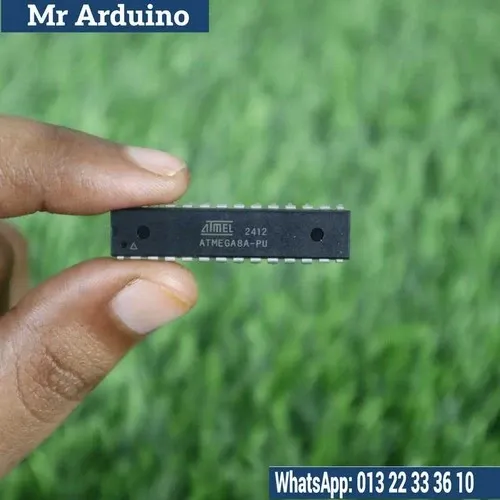
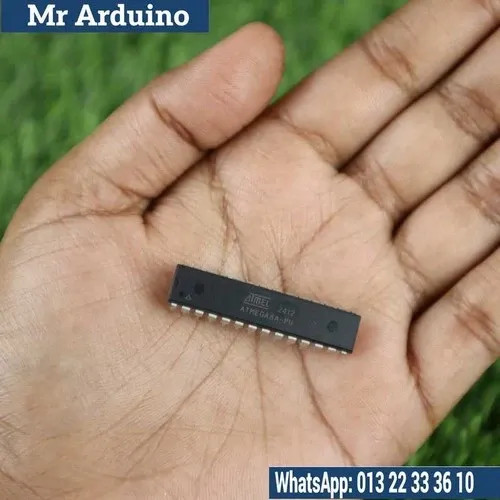
The ATmega8A-PU is an 8-bit AVR microcontroller from Microchip Technology, featuring high-performance and low-power consumption. It's a part of the ATmega series, and it offers flash memory for program storage, SRAM for data storage, and EEPROM for non-volatile data. The ATmega8A-PU is popular in embedded systems and DIY electronics projects, providing a balance of performance and power efficiency for a wide range of applications.
The ATmega8A-PU is known for its robust I/O features, advanced timers, and multiple communication protocols (UART, SPI, and I2C), making it suitable for a variety of control and automation tasks. It has 8-bit processing power and is often used in Arduino-based projects, making it accessible for hobbyists and educators.
This microcontroller operates at a maximum clock speed of 16 MHz and is housed in a DIP-28 package, which is ideal for prototyping and breadboard use, allowing easy integration into custom circuits.
Key Features:
Architecture: 8-bit AVR RISC
Operating Voltage: 2.7V to 5.5V
Clock Speed: Up to 16 MHz
Flash Memory: 8KB (with 0.5KB reserved for the bootloader)
SRAM: 1KB
EEPROM: 512 Bytes
I/O Pins: 23 General Purpose I/O pins (including 6 PWM outputs and 8 ADC channels)
Timers: 3 timers (one 8-bit, two 16-bit)
Communication Protocols:
UART (Universal Asynchronous Receiver Transmitter)
SPI (Serial Peripheral Interface)
I2C (Inter-Integrated Circuit)
ADC (Analog to Digital Converter): 10-bit ADC with 8 channels for analog sensor interfacing
PWM (Pulse Width Modulation): 6 PWM channels for motor control, LED dimming, and other applications
Watchdog Timer: Built-in watchdog timer for system stability and recovery
Interrupts: External interrupts and programmable interrupts
Package Type: DIP-28, ideal for prototyping and easy breadboard mounting
Applications:
Embedded Systems: The ATmega8A-PU is widely used in embedded system applications where a microcontroller is required to control or automate processes, including home automation, consumer electronics, and industrial control systems.
DIY Projects: It is a popular choice for hobbyist projects due to its ease of use, Arduino compatibility, and rich set of features. It can be found in robotics, sensor interfacing, motor control, and many other projects.
Arduino-Compatible Boards: Many Arduino clones and other development boards use the ATmega8A-PU microcontroller due to its availability, ease of programming, and wide community support.
Sensor and Actuator Control: The ATmega8A-PU can read data from analog sensors (using its ADC) and control actuators like motors, servos, or relays via its I/O pins.
Signal Processing: Its ability to handle PWM and ADC makes it suitable for applications like audio signal processing, light control, and temperature regulation.
Prototyping: It is ideal for prototyping and development projects, where fast testing of ideas and concepts is necessary.
How It Works: The ATmega8A-PU operates by executing machine instructions stored in its Flash memory. The microcontroller processes inputs from the digital I/O pins (reading sensors, switches, etc.) and can send control signals to external devices like LEDs, motors, displays, or relays.
Program Execution: The microcontroller begins executing instructions from its Flash memory, controlling the I/O pins and interacting with connected devices. The program is typically written in C or C++ using a development environment like Atmel Studio or Arduino IDE.
Analog to Digital Conversion (ADC): The ATmega8A-PU includes a 10-bit ADC, allowing it to convert analog voltages (from sensors) into digital values that can be processed by the microcontroller. This is useful for interfacing with sensors like temperature sensors, light sensors, or other analog devices.
PWM and Timers: The ATmega8A-PU features PWM outputs on certain pins, which can be used to control motor speeds, dim LEDs, or generate variable frequency signals. It also includes multiple timers to handle tasks such as time delays, pulse generation, and event scheduling.
Communication (UART, SPI, I2C): The microcontroller can communicate with other devices using serial communication (UART), SPI, or I2C. These protocols are widely used to interface with external sensors, displays, memory chips, or other microcontrollers in embedded systems.
Interrupts: The ATmega8A-PU supports external interrupts, which allow it to react to events, such as a button press or a sensor trigger. This enables the microcontroller to perform time-sensitive operations without constantly polling for events.
Low Power Operation: The ATmega8A-PU supports low-power modes such as sleep mode and idle mode, where the microcontroller can reduce power consumption during periods of inactivity, making it ideal for battery-operated systems.
Product Limitations:
Memory Constraints: With 8KB of Flash memory, 1KB of SRAM, and 512 Bytes of EEPROM, the ATmega8A-PU is limited in terms of storage capacity, making it unsuitable for large applications that require more memory, like complex graphics or extensive data logging.
Processing Power: While it performs well for simple to moderate tasks, the 8-bit architecture of the ATmega8A-PU may not be fast enough for high-speed or high-complexity operations such as digital signal processing (DSP) or real-time control for advanced systems.
Limited Communication Protocols: The ATmega8A-PU supports UART, SPI, and I2C, but it does not have built-in support for modern communication standards like Ethernet, Wi-Fi, or Bluetooth, requiring external modules for these functions.
Conclusion: The ATmega8A-PU is a versatile and reliable 8-bit microcontroller that is ideal for a variety of low-power and embedded system applications. Its 8KB Flash memory, 1KB SRAM, and 512 Bytes EEPROM make it well-suited for Arduino projects, sensor interfacing, motor control, and signal processing.
It offers a wide range of I/O capabilities, communication protocols, and low-power features, making it a great choice for hobbyists, educators, and developers looking to create custom electronic devices or small embedded systems. However, for more demanding applications requiring higher processing power or more memory, you may need to consider a more advanced microcontroller with better performance and additional features.
No review given yet!
Fast Delivery all across the country
Safe Payment
7 Days Return Policy
100% Authentic Products
You need to Sign in to view this feature
This address will be removed from this list