Your cart is empty, and it looks like you haven’t added anything yet.
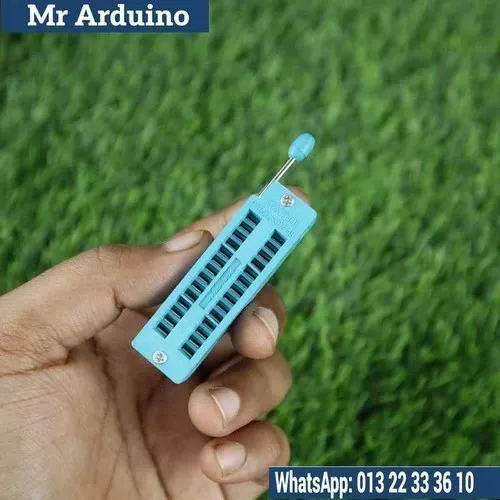
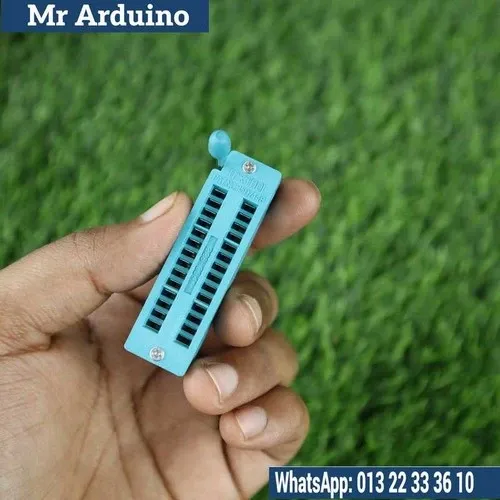
The 28 Pin ZIF (Zero Insertion Force) Socket is a high-quality electronic component designed to provide a simple and reliable connection for devices with 28 pins. The ZIF socket allows for easy insertion and removal of components, such as ICs (Integrated Circuits), without applying any force, thus reducing the risk of damaging the pins. The ZIF socket features a lever-actuated mechanism that opens the contact points for insertion and securely holds the component in place once the lever is pressed down.
This socket is particularly useful in applications where components need to be frequently replaced or tested, such as in IC programming, debugging, prototyping, and testing. The 28 Pin ZIF Socket is compatible with a wide variety of components, making it an essential tool for engineers, hobbyists, and professionals working with ICs or other multi-pin devices.
Key Features:
Pin Count: Specifically designed for 28-pin ICs, making it ideal for microcontrollers, EPROMs, EPROM programmers, memory chips, and other 28-pin components.
Zero Insertion Force (ZIF): The ZIF mechanism eliminates the need for force when inserting or removing ICs, reducing the risk of damaging the component or the socket itself.
Lever Mechanism: Equipped with a lever that, when lifted, opens the socket contacts, and when pressed down, locks the IC securely in place, providing a stable electrical connection.
Easy to Use: The lever-based design makes it quick and easy to insert and remove ICs without worrying about damaging delicate pins.
Transparent/Visible Inspection: Some ZIF sockets have clear plastic covers that allow users to visually inspect the socket's condition.
High Durability: Constructed with high-quality materials such as metal contacts and durable plastics, ensuring longevity and reliable operation over time.
Versatility: Suitable for IC testing, programming, and debugging in development, prototyping, and manufacturing environments.
Compact Design: Designed to fit into standard PCB mounts or test fixtures without taking up too much space.
Applications:
IC Programming: Commonly used in IC programmers to securely hold a 28-pin IC in place during the programming process. It allows for easy swapping of ICs without the risk of damaging the pins.
Testing & Debugging: Perfect for test benches and debugging setups where quick and frequent component changes are necessary. The 28-pin ZIF socket simplifies the process of inserting and removing chips without soldering or desoldering.
Prototyping: Ideal for prototyping circuits on a breadboard or development board, as it allows quick testing and modification of components.
Electronics Development: Used by engineers and designers to test and debug new circuits, especially in designs involving 28-pin ICs or memory chips.
Low-Volume Production: It can be helpful in low-volume or small-batch production runs where ICs need to be swapped out for testing purposes or during quality control.
Repair & Maintenance: Used in repair shops to test and replace faulty ICs in various consumer electronics or industrial equipment.
How It Works: The 28 Pin ZIF Socket functions with a lever-actuated mechanism that opens and closes the socket's contacts:
Step 1: To insert a component, lift the lever to open the contacts of the socket.
Step 2: Align the 28-pin IC or component with the socket, ensuring the pins are properly aligned with the socket’s contact points.
Step 3: Lower the lever to lock the socket in place, ensuring a secure connection between the component and the socket.
Step 4: To remove the component, simply lift the lever again, which will open the contacts, allowing easy removal of the IC.
This process prevents any insertion force, which could potentially damage the IC’s delicate pins or the socket itself.
Product Limitations:
Pin Count: This socket is specifically designed for 28-pin components. It cannot be used for components with more or fewer pins. A different ZIF socket would be required for other pin counts.
Voltage and Current Limitations: While the ZIF socket can handle standard low to moderate power components, the voltage and current rating of both the IC and the socket should be considered to avoid damage.
Mechanical Wear: Over time, frequent use of the lever mechanism could cause wear, potentially affecting the socket’s performance. Excessive force or improper handling could also lead to damage.
Size and Compatibility: The 28 Pin ZIF Socket requires adequate space on your PCB or test fixture. Ensure that the dimensions of the socket are compatible with your application.
The 28 Pin ZIF Socket is an essential tool for those working with 28-pin ICs or any other components with the same pin count. It simplifies testing, programming, and prototyping processes by ensuring easy and safe insertion and removal of ICs without the risk of pin damage.
No review given yet!
Fast Delivery all across the country
Safe Payment
7 Days Return Policy
100% Authentic Products
You need to Sign in to view this feature
This address will be removed from this list