Your cart is empty, and it looks like you haven’t added anything yet.
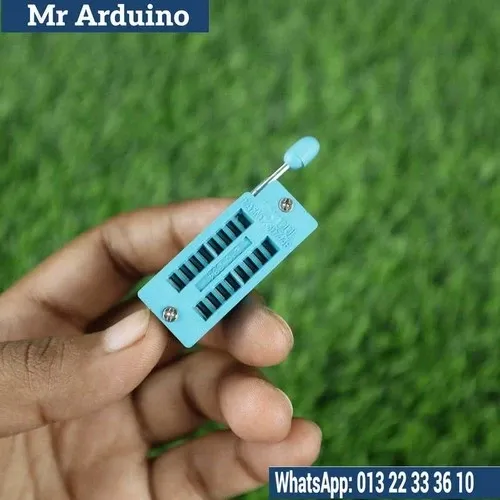
The 16 Pin ZIF (Zero Insertion Force) Socket is a highly useful electronic component designed to provide easy and reliable connections for devices with 16 pins. It is a type of socket that allows you to insert and remove integrated circuits (ICs) or other components without the need for force, which significantly reduces the risk of damaging the pins. This makes it an essential tool for programming, testing, and prototyping electronic circuits.
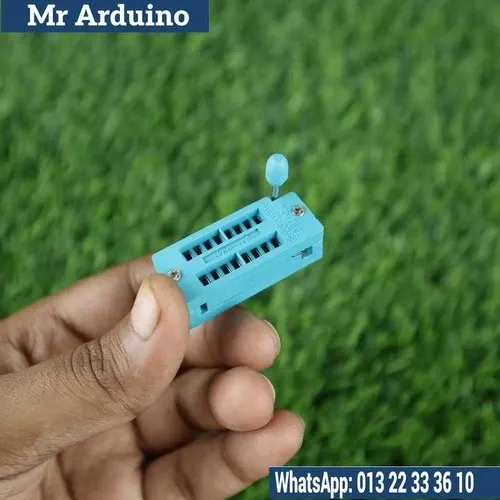
The ZIF socket features a lever-actuated mechanism that lifts and lowers the contacts, allowing for easy insertion and removal of chips. It is commonly used in IC programming, debugging systems, and test benches, as well as in development boards and prototype circuits.
Key Features:
Pin Count: Designed specifically for 16 pins, making it suitable for 16-pin ICs or other components with the same pin count.
Zero Insertion Force (ZIF): The ZIF mechanism eliminates the need for applying force when inserting or removing components, preventing damage to the pins and ensuring longevity of the ICs.
Lever Mechanism: A lever or latch that, when lifted, opens the socket contacts, and when pressed down, locks the IC in place, providing a secure connection.
High Durability: Made from high-quality materials like plastic, metal, and spring-loaded contacts to ensure long-lasting and reliable connections.
Versatility: Compatible with a variety of components such as EPROMs, microcontrollers, RAM chips, EPROM programmers, and more.
Compact Size: The 16 Pin ZIF Socket is designed to fit into standard PCB mountings or test fixtures, making it perfect for prototyping and testing circuits.
Secure Connection: Provides a firm yet gentle connection for the ICs, ensuring the pins are perfectly aligned and making it ideal for both high-frequency and low-power applications.
Applications:
IC Programming and Testing: Widely used in programming and testing ICs in devices like EPROM programmers, microcontroller programmers, burners, and test fixtures.
Prototyping: Ideal for development and prototyping, as it allows for quick and easy swapping of ICs or components without soldering.
Debugging Systems: Common in debugging systems to temporarily connect and disconnect ICs for testing or error checking in the development phase.
Test Benches: Frequently used in test benches for evaluating ICs and ensuring that they function as expected before final integration.
Manufacturing & Production: Sometimes used in low-volume production runs or repair/maintenance when ICs need to be easily replaced or upgraded.
How It Works: The 16 Pin ZIF Socket operates with a lever that, when lifted, opens the socket's contact pins. This allows you to insert an IC (integrated circuit) or other 16-pin components into the socket without applying any force that could potentially damage the pins. After the IC is inserted, the lever is pressed down, which clamps the IC securely into place, ensuring that the pins make a reliable electrical connection.
Step 1: Lift the lever to open the contacts.
Step 2: Insert the 16-pin IC into the socket, ensuring that the IC's pins align with the socket's contacts.
Step 3: Press down the lever to close the socket and lock the IC in place, making a secure connection.
Step 4: When you need to remove the IC, simply lift the lever, and the IC can be easily removed without risk of pin damage.
Product Limitations:
Pin Count: This socket is designed specifically for 16-pin components. It cannot be used for components with more or fewer pins without using a different socket configuration.
Voltage and Current Limitations: While the ZIF socket is suitable for low to moderate power components, it is essential to verify the current and voltage ratings of both the ICs and the socket to avoid overheating or damage.
Mechanical Wear: While ZIF sockets are durable, frequent use may lead to wear on the mechanical lever or contacts. Over time, the contacts may not provide a secure connection if used excessively.
Size: This socket is designed for use in systems or projects that can accommodate a 16-pin component. It's important to ensure that the dimensions of the socket will fit your particular project or board.
The 16 Pin ZIF Socket is an invaluable tool in electronics prototyping, programming, and testing. Its easy-to-use, zero-insertion force design provides a simple yet effective solution for inserting and removing components without risk of damage, making it an essential component for engineers, technicians, and hobbyists alike.
No review given yet!
Fast Delivery all across the country
Safe Payment
7 Days Return Policy
100% Authentic Products
You need to Sign in to view this feature
This address will be removed from this list