Your cart is empty, and it looks like you haven’t added anything yet.
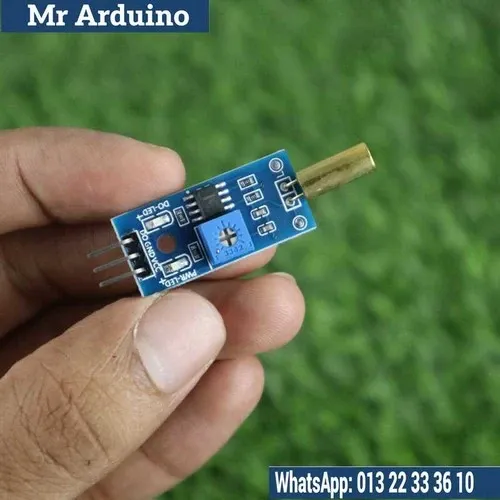
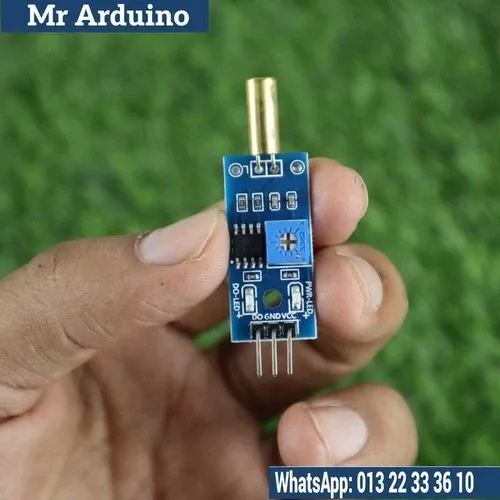
The Tilt Sensor Module is a compact and easy-to-use sensor that detects changes in orientation or tilt angle. It works by detecting when the sensor is tilted from its upright position and then outputting a signal based on the detected movement. The module is ideal for applications such as motion detection, robotics, level indicators, and safety systems, where detecting the tilt or orientation of an object is crucial.
This module typically uses a mechanical switch or electronic components like accelerometers to detect changes in the tilt or angle, making it a versatile and essential tool for a wide variety of projects.
Key Features:
Simple Tilt Detection: The module can detect even slight changes in orientation, outputting a digital high or low signal depending on whether the sensor is tilted or remains level.
Compact and Lightweight: The sensor is small and lightweight, making it ideal for embedded projects or devices where size and weight are important considerations.
Digital Output: It generally provides a digital output, either high or low, depending on the detected tilt, which is easy to read with a microcontroller like Arduino, Raspberry Pi, or other development boards.
Wide Application Range: It can be used in a wide variety of projects, such as automatic lighting, level indicators, alarm systems, and more.
Low Power Consumption: The module typically consumes minimal power, making it suitable for battery-powered or low-power devices.
Adjustable Sensitivity (for some versions): Some tilt sensors allow users to adjust the sensitivity to tilt angle, giving flexibility in design.
How it Works:
Detecting Tilt: When the module is tilted, the internal switch or accelerometer detects the change in orientation.
Digital Signal Output: Depending on the design, the sensor then outputs a digital signal (high or low) based on the detected tilt. This signal can be used to trigger events, such as turning on lights or sending alerts.
Output Interface: The digital output can be interfaced directly with microcontrollers and processed for further actions, such as turning on or off devices, activating alarms, or controlling motors in robotic applications.
Applications:
Robotics: Tilt sensors are commonly used in robots to detect orientation or balance, enabling robots to adjust their movements when they tilt or fall over.
Level Sensing: This sensor is often used in level indicators for detecting whether a surface is level or tilted. It can be integrated into devices like spirit levels, pool level monitors, or equipment stability checks.
Automated Lighting Systems: Used in automatic lighting systems where lights can be activated when a person tilts the sensor, indicating entry or movement.
Alarm Systems: Tilt sensors are often integrated into security systems to detect unauthorized movement or tampering with equipment. For example, they can trigger an alarm if a door or safe is tilted or tampered with.
Wearables: Tilt sensors are used in wearable devices like activity trackers or smartwatches to detect body position, activity levels, or gestures.
Toys and Games: Used in interactive toys, games, or educational tools where tilting triggers changes in the system, adding an element of motion-based control.
Vehicles and Drones: Tilt sensors are also applied in drones or vehicles for detecting roll or pitch angles, helping to maintain stability and proper orientation during flight or movement.
Limitations:
Limited Angle Detection: Some tilt sensors can only detect tilt within a specific range or angle. For example, mechanical tilt switches might only detect when the sensor is flipped upside down or tilted beyond a certain threshold.
Low Sensitivity: Some basic tilt sensors (mechanical switches) may not detect small changes in angle and may require more significant tilts to activate the signal. More sensitive versions (such as accelerometer-based sensors) may be needed for finer measurements.
No Absolute Angle Measurement: Most tilt sensors provide a simple binary output (high/low), meaning they do not provide the precise angle of tilt. If you need continuous tilt angle data (e.g., for precise positioning), an accelerometer-based sensor would be a better choice.
Mechanical Wear (for mechanical tilt sensors): Mechanical tilt sensors with switches may wear out over time with frequent tilting or use, potentially leading to failure.
The Tilt Sensor Module is a versatile and essential component for any project that requires detecting orientation or movement. Whether used for robotics, security, interactive systems, or level sensing, this sensor offers reliable and easy-to-implement tilt detection.
Order your Tilt Sensor Module today at www.mrarduino.com and add reliable tilt detection to your next project!
No review given yet!
Fast Delivery all across the country
Safe Payment
7 Days Return Policy
100% Authentic Products
You need to Sign in to view this feature
This address will be removed from this list