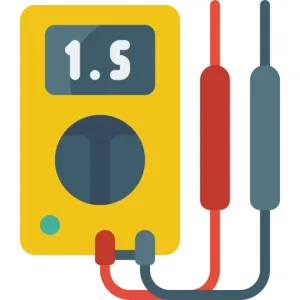
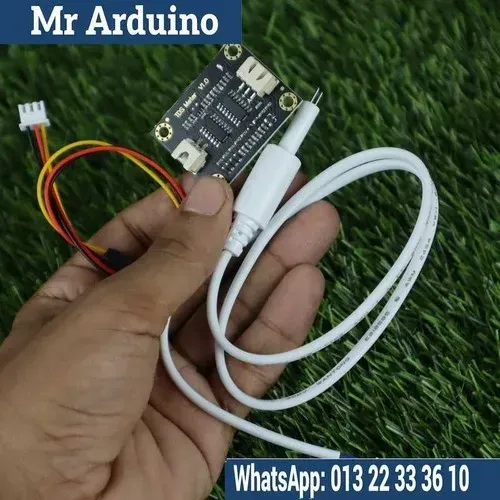
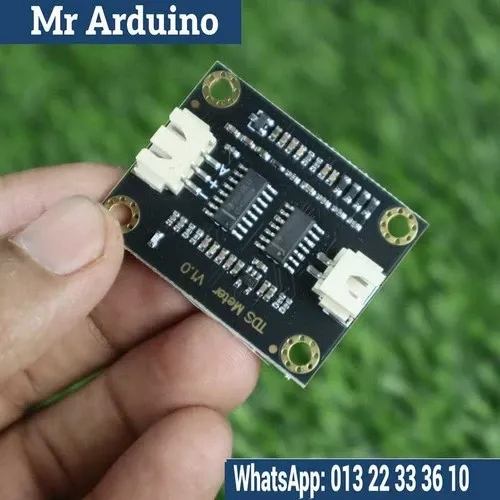
The TDS Meter V1.0 (Total Dissolved Solids Meter) is an essential tool for measuring the concentration of dissolved solids, such as salts, minerals, and metals, in water. This device is widely used in various applications to assess water quality, especially in industries, laboratories, water treatment plants, aquariums, and agricultural fields. The meter provides an accurate reading of the TDS value in water, giving users an indication of the overall water quality.
The TDS meter is particularly useful in assessing the purity of water. The higher the TDS level, the more dissolved solids are present, which can impact water taste, quality, and its suitability for certain applications. It is an easy-to-use, portable, and cost-effective solution for monitoring water conditions.
How It Works:
The TDS Meter V1.0 measures the electrical conductivity (EC) of the water, as dissolved solids like salts and minerals can conduct electricity. The meter uses this principle to determine the TDS level, which is displayed in parts per million (ppm).
- Electrode Measurement: The meter has a probe or electrodes that are placed in the water to measure the electrical conductivity.
- Conductivity to TDS Conversion: The conductivity value is then converted into a TDS reading based on a known conversion factor (typically 0.5 to 1.0). This gives a result in ppm (parts per million), which indicates the concentration of dissolved solids in the water.
- Display: The meter shows the TDS level on a digital display, allowing users to quickly assess the quality of the water.
- Temperature Compensation: Many TDS meters have automatic temperature compensation (ATC) to adjust the reading based on water temperature, as conductivity can vary with temperature.
Key Features:
- Accurate TDS Measurement: Provides accurate TDS readings in ppm to evaluate the level of dissolved solids in water.
- Wide Measurement Range: Can measure a wide range of TDS levels, typically from 0 to 9999 ppm (depending on the specific model).
- Easy-to-Read Display: Features a clear digital LCD display that shows the TDS value for easy interpretation.
- Automatic Temperature Compensation (ATC): Compensates for temperature fluctuations, ensuring more accurate and consistent results regardless of water temperature.
- Portable and Lightweight: Compact and easy to use, making it ideal for field testing or home use.
- Low Power Consumption: Operates on batteries, making it energy-efficient and ideal for portable use.
- Calibration: Many models are adjustable, allowing for calibration for precise measurements.
- Wide Application: Suitable for testing drinking water, pool water, aquariums, and other water sources.
Specifications:
- Measurement Range: Typically 0-9999 ppm or 0-5000 ppm (depending on the model).
- Accuracy: ±1% of reading or better (depending on the quality of the meter).
- Power Supply: Usually powered by 1 to 2 AAA batteries.
- Temperature Compensation: Automatic temperature compensation (ATC) for accurate readings across a wide range of water temperatures.
- Display: Digital LCD display for easy-to-read measurements.
- Operating Temperature Range: Typically 0°C to 50°C (32°F to 122°F).
- Calibration: Manual or automatic calibration with standard solutions.
Applications:
- Water Purity Testing: Used to test the quality of drinking water, especially in areas without reliable water treatment facilities.
- Aquarium Monitoring: Helps aquarium owners monitor water quality, ensuring the health of fish and plants by checking for excessive dissolved solids.
- Swimming Pool Testing: Used to assess pool water quality and ensure it is within safe limits for swimming.
- Agriculture & Hydroponics: Useful in agricultural applications to monitor water quality in irrigation systems or hydroponic setups.
- Industrial Water Treatment: Used in water treatment facilities to monitor the effectiveness of water purification systems and ensure water quality meets standards.
- Laboratories: Often used in scientific research or testing environments where water purity is crucial.
Limitations:
- TDS Is Not Specific: The TDS meter does not differentiate between the types of dissolved solids, so it cannot identify specific contaminants or substances. High TDS might indicate the presence of harmful chemicals, but the meter does not provide that level of detail.
- No pH Measurement: While TDS meters measure dissolved solids, they do not measure the pH level or other chemical properties of the water, which could be critical for some applications.
- Battery Dependence: The meter requires batteries for operation, which could run out over time and need to be replaced.
- Not Suitable for Highly Contaminated Water: For highly contaminated water, especially industrial wastewater, a TDS meter might not give a complete understanding of the water's quality and additional testing might be required.
The TDS Meter V1.0 is an excellent tool for those who need a quick and easy way to check the quality of water. Whether you're monitoring your drinking water, testing a pool, or ensuring the water in an aquarium is safe for aquatic life, the TDS Meter is a reliable, simple-to-use device for water quality assessment.