Your cart is empty, and it looks like you haven’t added anything yet.
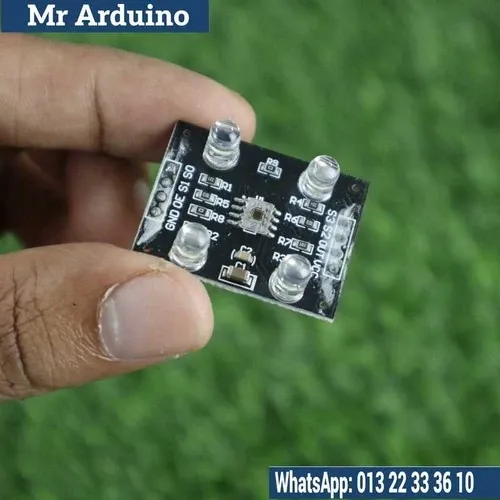
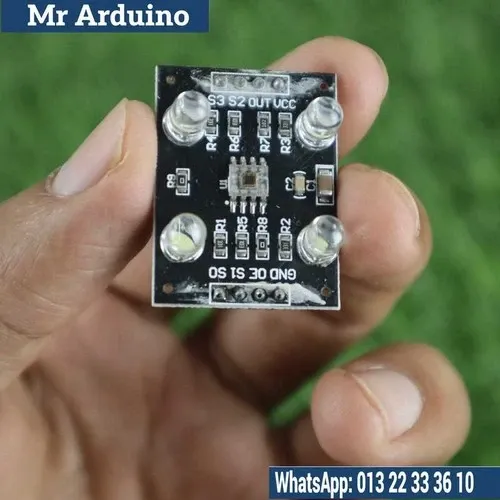
The Color Sensor Module is a versatile and easy-to-use sensor designed to detect and identify the color of objects placed in front of it. Based on advanced RGB color detection technology, this module can output color data (Red, Green, and Blue values) to a microcontroller, making it ideal for applications in robotics, automation, sorting systems, and color recognition projects. The module is compact, efficient, and integrates easily with popular microcontrollers like Arduino and Raspberry Pi.
Key Features:
RGB Color Detection: The sensor detects the intensity of Red, Green, and Blue light from the object, providing accurate color information.
High Sensitivity: Capable of detecting a wide range of colors with high accuracy.
Communication: Outputs data via I2C or analog signal, allowing easy integration with a variety of microcontroller platforms.
Easy Calibration: The module is simple to calibrate for different lighting conditions, ensuring reliable performance in various environments.
Small Form Factor: Compact design for easy integration into projects without taking up much space.
Low Power Consumption: Designed to operate efficiently, ideal for battery-powered applications.
How it Works:
Object Detection: The Color Sensor Module uses an array of photodiodes to detect the light reflected off an object in front of it. This light is filtered into Red, Green, and Blue components.
Color Measurement: The sensor converts the detected light into three values: one for each of the primary colors (Red, Green, and Blue), which are then sent to the connected microcontroller.
Microcontroller Communication: Depending on the model, the data is transmitted to the microcontroller either through I2C communication or an analog output.
Processing and Action: Once the microcontroller receives the RGB data, it can be used to identify the color and perform actions accordingly, such as activating different LEDs, sorting objects by color, or controlling robotic arms.
Applications:
Robotics: Use in robots for color recognition tasks, such as following a colored line or identifying objects based on their color.
Object Sorting: Ideal for automated systems where objects need to be sorted based on their color (e.g., in manufacturing or recycling).
Color Detection for Displays: Can be used for interactive projects where color changes or inputs are involved, such as interactive displays or color-sensitive interfaces.
DIY Projects: Perfect for hobbyists and makers looking to create projects that require color detection, such as color-sorting machines or automated painting systems.
Educational Tools: Great for teaching concepts of color theory, light sensors, and basic electronics in educational environments.
Limitations:
Lighting Sensitivity: The sensor's accuracy may be affected by ambient lighting conditions. It’s important to calibrate the sensor in the lighting conditions where it will be used.
Color Accuracy: While the sensor detects RGB values, it may not perfectly match the human eye’s perception of color in all situations.
Distance Limitation: The sensor works best at short distances. It may not accurately detect color if the object is too far away.
The Color Sensor Module is an essential tool for anyone working on projects that require color recognition, offering easy integration with microcontroller systems like Arduino or Raspberry Pi. Whether you're building a robot, creating a sorting system, or designing a color-sensitive interface, this module is a reliable and cost-effective solution.
Get your Color Sensor Module today at www.mrarduino.com and start adding color detection capabilities to your projects!
No review given yet!
Fast Delivery all across the country
Safe Payment
7 Days Return Policy
100% Authentic Products
You need to Sign in to view this feature
This address will be removed from this list